Dr. Gymbro
←

#fermented whey

1 article
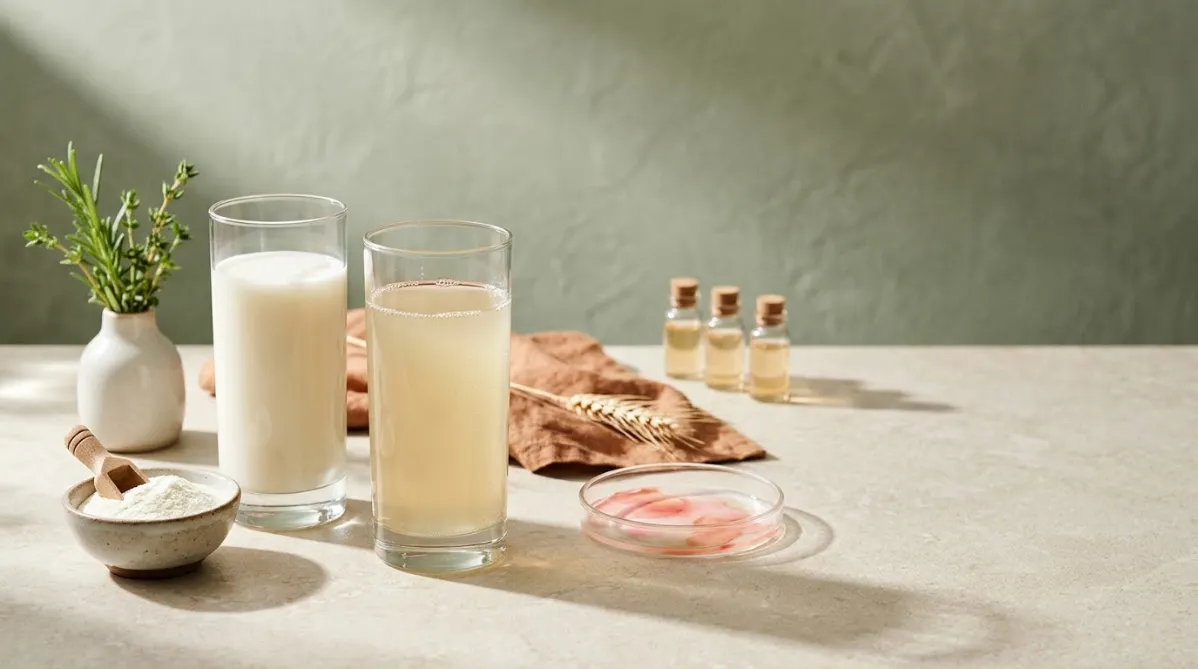
A softly lit editorial still life on a pale oat-colored stone surface, shot from a slightly elevated three-quarter angle. In the foreground, two matching tall glasses of milky, creamy liquid stand side by side. The left glass holds a smooth, opaque white whey drink. The right holds a slightly more translucent, pale champagne-yellow fermented whey with fine, delicate bubbles clinging to the inside of the glass. Beside them sits a small ceramic bowl of white whey powder with a wooden scoop, and a few sprigs of fresh herbs in a minimalist ceramic vase add a touch of green.

Behind the glasses, slightly out of focus, a row of three small clear glass vials with cork stoppers contains pale amber serum. A delicate glass petri dish in the mid-ground holds a soft, abstract blush-pink and coral watercolor-like swirl suggesting cultured cells, with no clinical or futuristic detailing. A folded linen napkin in warm terracotta and a single sprig of dried wheat grass add organic texture.

The background is a muted sage-green plaster wall with a gentle gradient of natural window light falling from the left, casting long, soft shadows and subtle caustic reflections from the glasses across the surface. The palette is warm and earthy: cream, oat, sage, soft terracotta, and pale amber, with small accents of blush pink.

The composition leaves generous negative space on the right third of the frame for headline overlay. Shallow depth of field, fine film grain, and a calm, contemporary wellness-journal aesthetic, like a high-end nutrition or food-science magazine spread. Crisp focus on the glasses, with a creamy bokeh falloff in the background. No text, no labels, no people, no laboratory machinery, no futuristic elements.
science research

Soro de whey fermentado faz células musculares crescerem mais que o whey regular

BY DR. GYMBRO ·

Sangue coletado após a ingestão de whey fermentado fez células musculares de camundongo crescerem mais do que o sangue obtido após whey tradicional. O estudo, realizado no Japão, utilizou soro de jovens e idosos para tratar miotubos C2C12, observando aumento de diâmetro, sinalização S6K1 (mTOR) e marcadores de metabolismo oxidativo. A síntese de proteína muscular foi ainda maior com soro de doadores mais velhos, sugerindo uma possível vantagem contra a resistência anabólica. Contudo, nada disso demonstra que o whey fermentado realmente produza mais músculo em humanos; ainda são necessários ensaios clínicos diretos.

This page is available in